
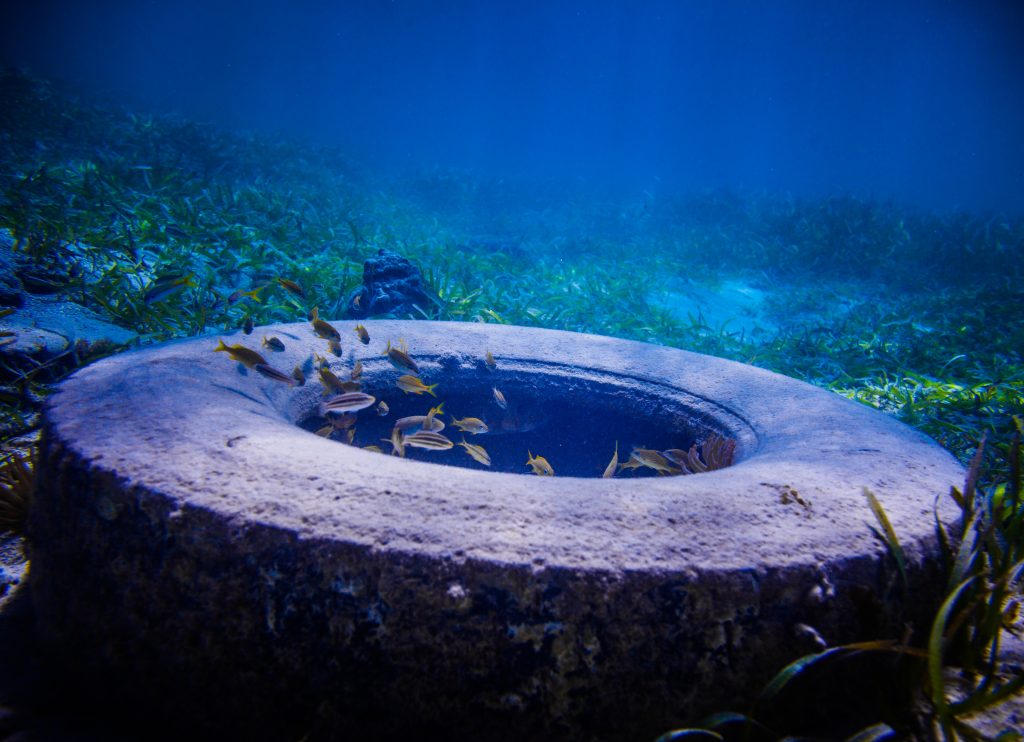
Just over two kilometers from Fort Lauderdale Beach, the same scene plays out day after day: divers descend into the ocean to retrieve car tires. The official tally for January 2026 reports that 535,676 tires were removed from a single priority work zone between 2015 and 2025. The cleanup is expected to continue well past 2030.
These tires were dumped into the ocean in the early 1970s to address two problems: the accumulation of used tires and the decline of certain fish populations, at a time when recreational fishing was experiencing significant growth. It was hoped that the tires would form artificial reefs capable of attracting fish and thereby boost the industry.
This project is known as the Osborne Reef
From 1966 to 1974, federal researchers from the U.S. Bureau of Recreational Fisheries and Wildlife studied the use of discarded materials to build artificial reefs. Their work led to a recommendation to use tires. The State of Florida granted its approval. The project was carried out by Broward Artificial Reef Inc. According to the Florida Department of Environmental Protection, between one and two million tires were dumped into the water for this project alone.
The Osborne project went very wrong. The problem stemmed from the instability of the tires and the deterioration of the fasteners holding them together. Once released, they were carried away by currents and storms, damaging natural coral reefs.
As early as 1974, problems were being reported: fasteners were breaking and tires were drifting away. In February 1975, Broward County Commissioner Anne Kolb attempted to halt the project, but was unsuccessful. Despite these early warnings, the dumping continued until 1979.
The problem is widespread. An article by D. Porsnovs published in the journal History and Philosophy of the Life Sciences indicates that more than 700 artificial reefs containing tens of millions of tires have been created along the U.S. Atlantic coast.
While a 2019 survey covered an area of approximately 300 hectares, a more extensive mapping effort conducted between November 2023 and January 2024 expanded the total area studied to more than 2,000 hectares. This allowed for a more accurate assessment of the extent to which the tires had spread across the seafloor. Several tires had traveled long distances simply by rolling along the seafloor.
The first documented recovery operations date back to 2001. In 2006, a federal program to combat marine debris made it possible to organize a large-scale operation.
According to an official projection from January 2026, nearly 946,000 tires will have been removed by 2033 off the coast of Fort Lauderdale. A broader restoration plan, which could extend through 2038, calls for estimated expenditures of nearly 137 million U.S. dollars: removal from sandy areas, 78.34 million; removal from coral reef areas, 18.66 million; and biological restoration, 39.83 million.
Translated with Deepl